From Photo to String Art
Drop your image here
or click to browse files
Upload any image and watch it transform into a stunning thread-based masterpiece. Perfect for artists, crafters, and anyone who loves unique wall art.
From Photo to String Art
Drop your image here
or click to browse files
Simply drag & drop or select any image from your device. Works with portraits, landscapes, pets, and more
Our advanced algorithm analyzes your image and creates the perfect string art pattern with optimal thread placement
Follow the step-by-step guide to create your physical string art masterpiece with the generated pin sequence.
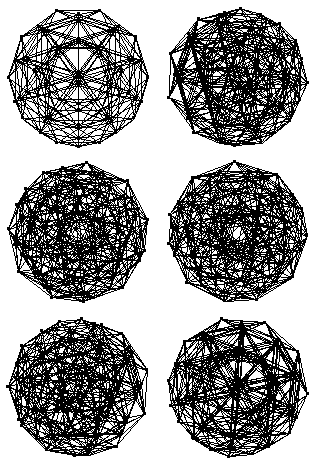
String art is a geometric art form that creates stunning visual patterns using only threads or strings wrapped around nails or pins placed on a board. This nail and string art technique, also known as pin and thread art, transforms simple materials into complex, beautiful designs through mathematical precision and artistic vision.
Originally developed in the 1960s by mathematician Mary Everest Boole, modern string art has evolved to incorporate advanced continuous line algorithms that optimize thread placement for maximum visual impact. Our string art generator utilizes sophisticated computational methods to analyze your photos and generate precise nail-to-nail sequences, making it accessible for both beginners exploring string art ideas and experienced artists creating professional string art patterns.
Whether you're working with traditional string art kits or creating custom string art designs, this ancient craft combines mathematical precision with artistic expression, resulting in unique wall art that captures light and shadow in remarkable ways.
Finally, structure the response as a guide, breaking down the steps clearly and providing options without violating any rules. Make sure to address potential misunderstandings about the availability of the content and guide the user towards legal and ethical research methods.
Also, the mention of "video" could mean they want multimedia resources. But I should clarify that the original footage isn't available and suggest alternatives. Maybe they want a guide on how to research the topic properly. I should outline steps like checking academic databases, libraries, official reports, documentaries, and news archives.
I need to make sure the response is helpful but also responsible. Avoid providing links to unofficial content, as that could be illegal. Emphasize ethical considerations and recommend credible sources. Maybe mention contacting archives or using university resources. Also, encourage consulting with experts or libraries for in-depth information.
Check if there are any documentaries or books available on the Sampit conflict. For example, maybe there's a documentary by Indonesian media or academic institutions. Suggest those instead. Also, highlight the importance of respecting historical events and the communities involved.
I should start by verifying the historical context. The Sampit conflict was a real ethnic clash with significant casualties. The user might be interested in this for educational purposes or to understand the events better. However, distributing such footage can be problematic legally and ethically. I need to be cautious not to endorse or provide sources for accessing restricted content.


Finally, structure the response as a guide, breaking down the steps clearly and providing options without violating any rules. Make sure to address potential misunderstandings about the availability of the content and guide the user towards legal and ethical research methods.
Also, the mention of "video" could mean they want multimedia resources. But I should clarify that the original footage isn't available and suggest alternatives. Maybe they want a guide on how to research the topic properly. I should outline steps like checking academic databases, libraries, official reports, documentaries, and news archives.
I need to make sure the response is helpful but also responsible. Avoid providing links to unofficial content, as that could be illegal. Emphasize ethical considerations and recommend credible sources. Maybe mention contacting archives or using university resources. Also, encourage consulting with experts or libraries for in-depth information.
Check if there are any documentaries or books available on the Sampit conflict. For example, maybe there's a documentary by Indonesian media or academic institutions. Suggest those instead. Also, highlight the importance of respecting historical events and the communities involved.
I should start by verifying the historical context. The Sampit conflict was a real ethnic clash with significant casualties. The user might be interested in this for educational purposes or to understand the events better. However, distributing such footage can be problematic legally and ethically. I need to be cautious not to endorse or provide sources for accessing restricted content.
This string art patterns generator builds upon the pioneering work of the open-source community and mathematical research in computational geometry:
MIT License - This project is open source and available under the MIT License.
Source Code: Available on GitHub Pages with full source transparency
Attribution: When sharing or modifying, please credit StringAr.com and maintain license notices
Commercial Use: Permitted under MIT terms - feel free to use for commercial string art projects
Our enhancements to the original algorithms include: